
By Michael Woestehoff, CEO
MPS (Navajo)

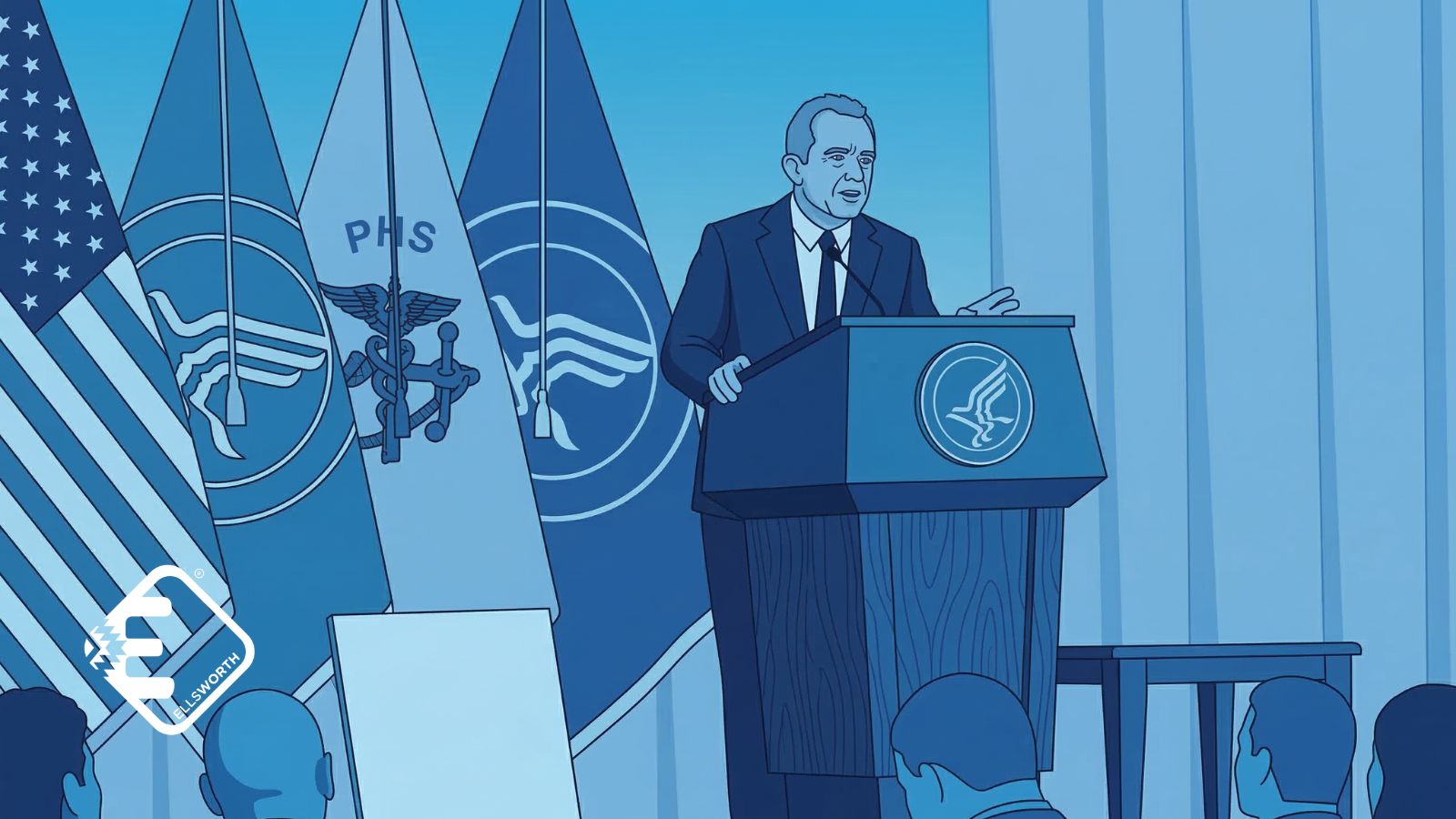
On Thursday, February 12, 2026, the Indian Health Service (IHS) convened its 70th Anniversary Tribal Summit, marking seven decades of federal trust responsibility. The event featured pivotal remarks from HHS Secretary Kennedy, who outlined a direct path forward to address the systemic challenges facing Tribal healthcare. The Secretary’s message was clear: the focus is now on concrete actions. Specifically, Secretary Kennedy announced three major pillars of immediate reform: the phasing out of mercury dental amalgams, a massive hiring initiative to combat a 30% personnel deficit, and a $1 billion investment to address the $8 billion infrastructure backlog.
Below, we provide a recap of the key takeaways for staffing and procurement officers, followed by the full transcript of the Secretary’s remarks.
Key Highlights
Before diving into the full text, here are the operational highlights that will impact staffing and resource allocation in Fiscal Year 2026-2027:
- Historic Hiring Initiative: Acknowledging a 30% deficit in personnel, the HHS has completed a systemwide assessment to target high-need roles and locations. The goal is to streamline recruitment for physicians, nurses, behavioral health professionals, and dentists.
- Infrastructure Investment: To tackle the $8 billion construction backlog, the Department is directing $1 billion in existing resources starting in FY 2027 to priority projects ready for deployment.
- Mercury Elimination: A directive has been issued to phase out mercury-containing dental amalgams in all IHS facilities, transitioning to safer, modern alternatives immediately.
- Food Sovereignty & Nutrition: A renewed focus on integrating traditional foods into reservation diets and aligning federal nutrition policy (USDA/HHS) with Tribal priorities to combat chronic disease.
- Behavioral Health Expansion: Increased staffing and support for culturally grounded recovery programs and sober housing, with a focus on Tribal-led design and operation.
Full Transcript: HHS Secretary Kennedy at the IHS 70th Anniversary Summit
The following remarks were delivered on February 12, 2026.
“I appreciate the Tribal leaders, the members of the Secretary’s Tribal Advisory Committee. We’re here today, your work guides our decisions. This year, we mark 70 years of The Indian Health Service, and I’m very proud that my uncle John F. Kennedy, as a freshman senator in 1954, voted to create The Indian Health Service, and it was one of his first votes, and one which he remained proud of his entire career.
For seven decades, the federal government has carried out trust responsibility to provide healthcare to American Indians and Alaska Natives. I take that responsibility very seriously. I spent 40 years doing and practicing environmental law, about 20% of my time was devoted to representing the Tribes and treaty negotiations and litigation against the extractive industry, against the big polluters. And when I came in here, I made the pledge that I was going to be the best HHS secretary in the history of the office. Tribal leaders at that time told me that HHS needed more consistent and more direct engagement with the Tribes. And I agree.
Over the past year, I traveled to reservations, Tribal communities, and IHS facilities around the country. And I’m told that I’ve made more trips to Indian Country than any HHS Secretary in history, and I intend to keep up that cadence. I met with patients, providers, elected leaders, a list of what works, and where we’re falling short. The Indian House Service delivers care at federally operated facilities, urban Indian healthcare programs, and Tribally operated systems under self-determination and self-governance agreements. Doctors, nurses, technicians, administrators show up every day to serve communities, who often face long distances, and limited resources. My responsibility is to make that system work and to make it stronger.
I’ve strengthened Tribal leadership inside the department. I created for the first time in history, a senior advisory role for Tribal affairs, and appointed Mark Cruz of the Klamath Tribe. And so Mark is, I see Mark almost every day. He’s in on all the decisions, the major decisions made in this department, representing the interests of the Indian people, and Tribal communities, and everything that we do.
I appointed Dr. Kim Kim Hartwig of the Nez Perce Tribe (with Navajo and Cowachin heritage), also into a leadership position at IHS. I delegated the authorities from the IHS Director to Clayton Fulton of the Cherokee Tribe. Tribal leaders should help lead the community systems that serve Tribal communities.
Today, I’m going to focus on concrete actions. First, we’re going to phase out mercury containing dental amalgams at IHS facilities. Science shows (sic) that mercury in dental filling is damaging the brains of children. And particularly when they drink hot drinks, it will off gases. And when I learned that Tribal facilities are still doing mercury, the dental facilities are still building mercury amalgams I said I want them out. And I’m very, very happy that the agency was able to comply very quickly. We reviewed the science, the operational impact, we decided to transition into much safer materials. IHS clinics will adopt modern (inaudible) alternatives and protect patients that align with current standards.
Second, we launched the largest hiring initiative in IHS history. Right now, IHS faces a 30% deficit in personnel. That shortage (inaudible) providers and limits access to care. We conducted a systemwide assessment to identify the most critical staffing gaps across hospitals, clinics, and administrative offices. We built a 2026 hiring plan that targets high need roles, and high need locations, and we are streamlining recruitment to make sure that we get that personnel out to your communities as quickly as possible. We’re gonna bring more physicians, nurses, behavioral health professionals, dentists, and support staff into the Tribal facilities, and we’re gonna work to keep them there.
Third, we’re addressing infrastructure. During my visits, I walked to facilities that badly needed a renovation or reconstruction or just replacement. I reviewed a construction backlog that is $8 billion. We allowed that backlog to grow for too long. This year, I’m planning to direct $1 billion in existing departmental resources starting in fiscal year 2027 and spread across the next few years to priority projects that are ready to move forward. We’re going to direct those funds to the facilities that need the most workforce infrastructure to form the foundation of care (sic). Prevention and long term health must follow.
HHS has worked with the department of agriculture (USDA) to update the dietary guidelines for all Americans. We reviewed the guidance, emphasized whole foods, healthy proteins, and healthy fats, including the seafood and legumes. Well, when we were doing the guidelines, one of the things that I talked about with the team/group (sic) that was doing them, was the need to get traditional foods back to reservation lands. Right now, 70% of the food that we are eating is ultra processed food (sic), and it is poison, and particularly for Native Americans, it is doubly dangerous. Many Tribal communities have practiced the principles of traditional foods for millennia, and across Indian Country, Tribes are restoring fisheries, expanding bison herds, building hydroponic systems, and operating community food programs. And we intend to do everything we can to support those projects.
When I went up to Alaska (sic), we found a greenhouse that had been funded by this department 15 years ago, and it had never been completed. There was piping that was still missing. I think it was about a $1-2 million investment. This is a very isolated community that is a six hour drive on a dirt road, from the nearest large city, and they have a whole winter where they can’t get fresh food. And this greenhouse will allow them to grow fresh food there, and then we were able to restore the greenhouse.
Tribal governments are strengthening food sovereignty, and improving nutrition through their own leadership, and our role at HHS is to support them and to help them. We are going to align federal nutrition policy with Tribal priorities. We are gonna improve coordination across the agencies: USDA, Interior (DOI), BLM, and HHS, we’re gonna reduce administrative barriers that limit access to food and health programs.
We’re also confronting behavioral health and addition, which disproportionately burdens Tribal communities. And it challenges many of the other things that we’re trying to do in those communities. IHS and SAMHSA are expanding access to treatment and recovering services, and we are increasing staffing for behavioral health services. We’re supporting sober housing. We’re funding – and I’ve seen incredible sober housing projects done in Arizona, and many other Tribal communities across the country, and some of them are role models for what we should be doing nationwide. We’re finding culturally grounded recovery programs that the Tribes design and operate themselves. Somebody who’s worked for 40 years on Tribal issues, the concept of sovereignty is at the heart of everything that I do. When Tribes lead these programs, they improve outcomes. We’ve seen that again and again. The Tribes can run the program, consistently, better than the federal government. We’re going to continue supporting these models.
The rural health transformation program also gives us tools to strengthen care in Tribal communities. Through this five year investment, we’re working with states to direct resources where they are needed most. Alaska is integrating traditional healing into clinical settings. Idaho is dedicating funding to its federally recognized Tribes. Maine is expanding substance abuse disorder treatment through Tribal providers. Washington State is strengthening workforce development and care coordination for Native families. Federal funding works best when the state’s coordinate closely with the Tribes and the Tribe shape the implementation. We’re gonna continue pushing for that line.
70 years after its founding, The Indian Health Service remains central to the federal trust responsibilities. That responsibility requires action and not rhetoric. We’re going to fill the vacancies, we’re going to mobilize and modernize facilities, we’re going to strengthen prevention, we’re going to expand access to behavioral healthcare, we’re gonna improve coordination with the Tribes at every level in this department.
I value your partnership, your candor and your leadership. I’ve asked all the Tribes whenever I visit them, ‘Tell us what we can do.’ Give us concrete things that we can do, because we want concrete accomplishments. At the end of this four year term, that we, that I, can point to for the rest of my life. I value your partnership, and together, we’re going to continue strengthening the Indian Health Service and improving health outcomes for American Indians and Alaska Natives. Thank you all very, very much.’
Secretary Kennedy was explicit in his address: the 30% deficit in personnel is a critical barrier to care that must be dismantled. As the IHS moves to operationalize this “largest hiring initiative in history,” the speed and quality of staffing deployment will be paramount.
Ellsworth Native Medical Staffing is uniquely positioned to ensure the success of this initiative. We understand the nuances of the “high need locations” the Secretary referenced, from the isolated clinics of Alaska to the bustling facilities of the Southwest. Our extensive network of physicians, nurses, and behavioral health professionals is vetted, culturally competent, and ready to mobilize. To our partners and IHS Contract Officers: we are ready to assist you in turning these new funding streams into active, on-the-ground providers who will strengthen the foundation of Tribal health. Contact Us Today to Discuss Staffing Solutions: info@ellsworth.solutions
Your Career, Our Expertise. Adventure Awaits: Join Ellsworth for rewarding locum tenens and medical staffing opportunities. Expertly Placed: 22 years of combined recruiting expertise at your fingertips. Culturally Competent Staffing: Specialized ISBEE-eligible solutions for healthcare professionals. Your Next Journey Starts Here: Create your free profile and embark on a rewarding career. Sign up now! Create your free profile.