
By Michael Woestehoff, CEO
MPS (Navajo)

Big tech’s latest fire is transforming mainstream America. It’s time to carry it to Indian Country — and health care is where we start.
Every few months now, another breakthrough rolls out of our biggest technology companies — new AI tools, new platforms, new capabilities that would have seemed impossible a year ago. That fire is being delivered, almost entirely, to mainstream communities. The question I keep asking is a simple one: when does that fire reach Indian Country?
I believe the answer is now, and I believe health care is the place to carry it.
What Uber Figured Out — and What Our Relatives Are Ready For
At Ellsworth, my 100% Navajo-owned federal medical staffing company, we’ve placed more than 65 clinicians in the past year alone at facilities near and dear to my heart on the Navajo Reservation — Chinle and Shiprock — with bids going into Pine Ridge and active conversations with Tribal 638 hospitals across Arizona and New Mexico. Much of what makes that work is technology running quietly on the back end. Our recruiters, our onboarding specialists, our government opportunity finders — all work alongside AI agents and intelligent vetting tools every day. And for years, the conversation in our industry has circled the same idea: how do we “appify” — or Uber-fy — the Indian Health Service in a way that actually works for patients and clinicians alike?
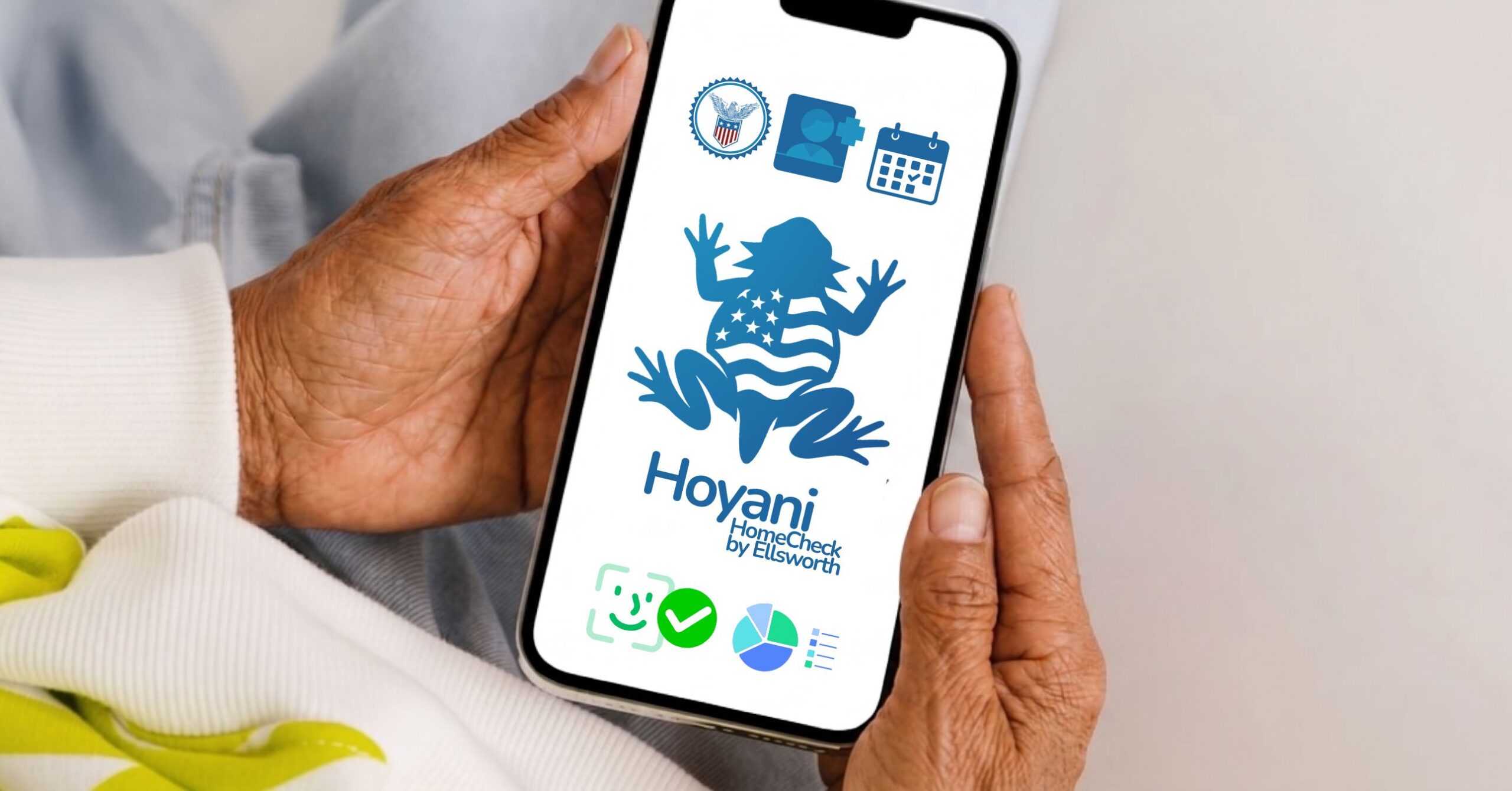
That’s what we’re building with Hoyani.
The insight behind Uber wasn’t really about cars. It was about letting people live in their community and serve their community, on their own schedule, through a single trusted interface. Our health care workers are asking for exactly that. They want flexibility. They want to help the people closest to them.
Nurse practitioners, clinicians with deep experience in tribal health systems, retired and semi-retired Indian Health Service professionals, former military medics — these are people with enormous skill and a genuine desire to serve, and today there’s no simple way for them to say yes to a neighbor who needs care.
Hoyani creates that ecosystem. A community member requests a service. A vetted, credentialed clinician — often someone they know, or whose family they know — accepts the visit and delivers care right there at home.
Start by Asking Our Relatives What They Need
Here’s what I think Silicon Valley gets backward: they build the product first and find the users later. We started by speaking to our people, knowing who our relatives are, and asking what services they actually need.
The answers were clear and consistent. At-home health care, especially for our elders. Medication delivery. Light housekeeping and daily support. And critically — delivered by somebody they may know. When a nurse walks into an elder’s home, that elder wants to see a familiar face, or at least a familiar last name. In small, rural, and remote communities, trust isn’t a feature you bolt on later. It’s the foundation.
Every Ellsworth clinician — our pediatric providers, our NPs, our pharmacists — goes through rigorous vetting and required culturally contextual training specific to the community they’ll serve. That training was created by me: Tuba City born, Ganado raised, New Mexico educated, with relatives still in Kayenta, Cameron, and Window Rock. I didn’t research this community. I come from it.
One App. Smart Multi-Payer. Agency Ready.
The hardest problem in Indian Country health care isn’t clinical. It’s the connection. A single patient might be eligible for Indian Health Service care, Arizona Medicaid through AHCCCS — which covers services for elders and disabled community members — tribal health programs such as those provided by the Navajo Nation, and private insurance on top of all of it. Consider that roughly 70 percent of tribal community members live in urban settings — Phoenix, Flagstaff, Tucson. They might carry private insurance from an employer, use the Indian Health Service for some care, and visit urgent care for everything else. Nobody coordinates any of it, and today’s electronic health records can’t tell a consistent data story across those systems.
Hoyani is designed as a single, multi-payer platform that routes each request to the right benefit and handles payment properly on the back end. Schedule a telehealth visit, see your dentist, book an appointment at the Indian Health Service facility in Phoenix — all in one place, all correctly billed.
Our Native veterans add another layer. Many carry VA health benefits that extend to the Indian Health Service or other federal programs, and today they navigate that maze alone. Hoyani is veteran-specific in its design: it lets them request care that draws on everything the federal government, their state Medicaid program, and their tribe can offer, in one interface.
Or picture a young mother — maybe working part-time, maybe not working at all. She’s enrolled in her tribe but carries no private health insurance, and she needs to book a postnatal appointment at her IHS facility for herself and her newborn. In Hoyani, she does it in a few taps. Everyone is included, and everything is routed directly to the right payer and the right provider.
And for the agencies themselves, the platform delivers a dashboard showing where care is being requested, what kind, and by whom — the demand data tribal health systems have never had, and exactly what they need to plan resources for the future.
Data Sovereignty: Trust Is the Product
None of this works without security and data sovereignty at its core. We’re talking about verifying tribal identification and Certificates of Indian Blood, VA identification, and service member credentials on the patient side — and fingerprinting, background checks, and medical certification verification on the clinician side. For tribal citizens to use this app, they need to know their data is protected and that our federal partners are standing behind that protection.
But data sovereignty in Indian Country goes deeper than passwords and encryption. The cultural context of who we are as Native people must be secure, too. A patient’s health story might include ceremonial fasting that affects when medication should be taken. It might note participation in summer or winter dances, or care that weaves holistic and traditional healing alongside Western medicine. It might simply be a visit conducted in a Native language, because that’s how an elder speaks about their own body and their own health. That information is sacred, and it belongs to the patient and their community — full stop. Hoyani is being built so this cultural context informs better care without ever leaving the patient’s control, shared only with the clinicians they trust and never mined, sold, or exposed.
Ellsworth has already proven it can onboard clinicians who respect all of this — and do it at top speed. We’re proud to have partnered to bring on more than 150 full-time recruiters who find and source candidates who are culturally grounded, with culturally competent care built into their requirements from day one.
In Indian Country, data sovereignty isn’t a compliance checkbox. My company is rooted where my relatives are. It starts and ends with who I am as a founder.
The Coalition It Takes
Building this requires a coalition, and it’s forming. We’re working with UX architects and engineers in this space. I have meetings scheduled with electronic health record companies that hold existing federal contracts. Communications are in motion with administrators at the VA, CMS, HHS, the Indian Health Service, and even the Department of Labor — because telehealth opens a workforce door, too. Medical students can observe and participate in telehealth visits, building a pipeline that brings more of our people into the health care industry. We’ve reached out to Arizona’s rural health transformation program and to private insurers.
It will take federal agencies, technology companies, tribal governments, and payers to make this work. But the network-building is the part Ellsworth knows best. It’s what we’ve done in medical staffing for years: find, place, and coordinate the right people across a complicated federal landscape.
And it’s firmly grounded in serving our relatives — multifaceted, multilayered people, urban and rural. We’re everywhere. And we need a health care delivery system moving at the same speed as every big health tech company and big tech company out there. We watch agentic AI, the race to Mars, all of it — but somebody has to focus on our most underserved and unserved populations. Most of the time, those are our Indigenous populations. That’s where I want to work. That’s who I want to help. And that’s who needs the solutions all the big guys are getting.
Arizona First. Then Everywhere.
The pilot starts in Arizona, where AHCCCS gives us a strong multi-payer foundation. From there, the expansion path is clear: New Mexico, Utah, the Dakotas, the Midwest — and then a national platform.
We’re building fast. Every week to ten days, on average, we’re coding new capabilities and designs that solve real technical problems — service coverage, connectivity in remote areas, security. There is an appetite for this, and an urgent need behind it: health care delivery remains one of the biggest unsolved problems facing tribal communities.
The door is open. If you’re a technology partner, payer, agency, or clinician who wants to serve your own community, we want to hear from you. The fire is burning now, and it is here. Let’s carry it home.
Michael Woestehoff is the founder and CEO of Ellsworth, a 100% Navajo-owned federal medical staffing company, and the creator of Hoyani, a multi-payer home-based care and telehealth platform for Indian Country. Contact: CEO@ellsworth.solutions
Your Career, Our Expertise. Adventure Awaits: Join Ellsworth for rewarding locum tenens and medical staffing opportunities. Expertly Placed: 22 years of combined recruiting expertise at your fingertips. Culturally Competent Staffing: Specialized ISBEE-eligible solutions for healthcare professionals. Your Next Journey Starts Here: Create your free profile and embark on a rewarding career. Sign up now! Create your free profile.