
By Michael Woestehoff, CEO
MPS (Navajo)

The answer to America’s healthcare crisis has been operating in Indian Country for decades.
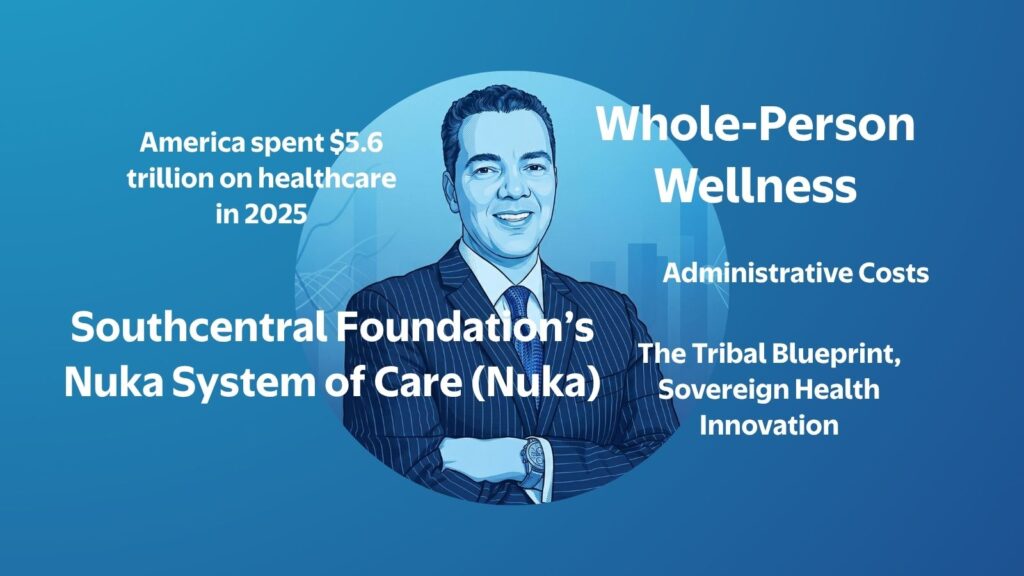
The U.S. Spends More, Gets Less — Our Relatives Deserve Better
America spent $5.6 trillion on healthcare in 2025 — more than the entire inflation-adjusted cost of World War II — yet ranks dead last, 10th out of 10 high-income nations, according to the Commonwealth Fund’s 2024 Mirror Mirror report. Costs are projected to reach $8.6 trillion by 2033, consuming 20–23% of every dollar earned in this country.
At the SPTHB Tribal Public Health Conference on April 8, 2026, Dr. Keley John Booth, MD, D.ABA — Board Certified Anesthesiologist, spine and joint specialist, and co-founder of the Oklahoma Rise 25 in 25 Foundation — presented a data-driven case for why tribal health sovereignty is the most actionable model for reforming American healthcare.
The Federal Funding Numbers Speak for Themselves
The Indian Health Service (IHS) receives $4,078 per capita to care for Native populations and Our Relatives. The federal prison system receives $8,600 per person. Medicare recipients receive $13,185. Native American life expectancy trails the national average by 8.3 years, and 22.5% of Indigenous Oklahomans under 65 are uninsured — nearly double the state’s overall rate.
Dr. Booth also highlighted a striking administrative data point from a certain university hospital: as of 2009, the facility employed approximately 1,300 billing clerks to manage just 900 patient beds — nearly 1.5 billing clerks per bed. Between 1975 and 2010, healthcare administrators in the U.S. grew at 3,200% — more than 20 times faster than the physician workforce grew at 150%.
Oklahoma Tribal Nations Are Already Building the Solution
Oklahoma — ranked 49th nationally in healthcare performance, with 70% of rural hospitals operating at negative margins and 10 hospital closures since 2005 — is simultaneously home to the most significant Native health infrastructure expansion in modern history.
The Cherokee Nation Health Services operates 11 health centers serving over 2 million patient visits annually. The Chickasaw Nation has invested $150M+ in a 370,000 square-foot medical center in Ada. Combined, Oklahoma’s tribal nations have committed $850M+ in capital investment, delivering culturally competent, culturally aware care built around whole-person wellness for Native populations and surrounding communities alike!
The Nuka Framework Delivers Measurable, Decades-Long Results
Alaska Southcentral Foundation’s Nuka System of Care — the only two-time Malcolm Baldridge National Quality Award winner in healthcare history — achieved a 36% reduction in hospital days, a 42% decrease in ER visits, and a 58% drop in specialty clinic visits through relationship-based, Indigenous-led care.
A behavioral health waitlist of 1,300 people was eliminated entirely through integrated care.
Ellsworth, a 100% Navajo-owned, ISBEE-certified Native owned small business, was proud to be in the room for this conversation at the SPTHB Tribal Public Health Conference — and we are grateful for every voice that showed up to advance Native health in Indian Country. We are listening, and we will continue to share the stories of success coming out of these communities, because these stories belong to all of us.
Your Career, Our Expertise. Adventure Awaits: Join Ellsworth for rewarding locum tenens and medical staffing opportunities. Expertly Placed: 22 years of combined recruiting expertise at your fingertips. Culturally Competent Staffing: Specialized ISBEE-eligible solutions for healthcare professionals. Your Next Journey Starts Here: Create your free profile and embark on a rewarding career. Sign up now! Create your free profile.